Current Exhibition

From When Is Now? — Settai Komura and Takuro Tamayama

From When Is Now? — Settai Komura and Takuro Tamayama

Duration: Tuesday November 3, 2026 to Sunday February 28, 2027

Shiseido Gallery will present From When Is Now? — Settai Komura and Takuro Tamayama from Tuesday, November 3, 2026, to Sunday, February 28, 2027. The exhibition brings together the work of Settai Komura (1887–1940), an artist active during the Taishō and early Shōwa periods, and Takuro Tamayama (b. 1990), a contemporary artist whose installations combining sculptural forms, light, video, and sound have attracted attention in Japan and abroad. At Shiseido Gallery, which has witnessed Ginza’s transformation since opening in 1919, the work of these two artists comes together across nearly a century, bringing Komura’s way of seeing into the present.

Settai Komura studied at the Tokyo School of Fine Arts (now Tokyo University of the Arts) and became a leading figure in a wide range of fields during the Taishō and early Shōwa periods, from Nihonga, illustration, and book design to design and historical research for the stage and screen. His association with Shiseido began with his work in the company’s Design Department [1] (later the Advertising Department), where he was based from 1918 to 1923. Even after leaving the company, he continued to play a significant role in establishing the foundations of the Shiseido typeface and Japanese logotype, both of which remain in use today. His modern, delicate style, with its distinctive use of negative space, is said to have much in common with the Shiseido style that endures today.

“As I think of the Buddhas
I have visited and prayed before since this morning,
listening to the sound of insects,
I can no longer tell
whether the present is now or long ago.”
— Settai Komura, “Visiting Ancient Temples,” Modan Nihon, Vol. 8, No. 1, January 1, 1937

The exhibition’s main title, From When Is Now?, is drawn from the line “I can no longer tell whether the present is now or long ago” in Komura’s late essay “Visiting Ancient Temples.”
Komura’s work is characterized by its distinctive use of negative space and the overlapping layers of time woven into it. The space of Shiseido Gallery is also rich with layers of time accumulated alongside Ginza—the district where Komura once worked, and which has continually created new forms of beauty and culture while retaining its distinctive elegance. With Tamayama’s new installation in this space, the boundary between present and past gradually begins to dissolve as viewers move through it and the work responds to their passage. When two sensibilities separated by nearly a century overlap, to what time do the countless imaginings that emerge between them belong? As viewers bring their own memories and perceptions into this encounter, another “now” begins to take shape.
The exhibition is curated by Jin Qiuyu, an emerging curator with an international practice. It features a new installation by Takuro Tamayama alongside three items by Settai Komura from the Shiseido collection.

[1] Shiseido’s Design Department
Founded in 1916 by Shiseido’s first president, Shinzo Fukuhara, the department brought together emerging young artists to create posters, newspaper and magazine advertisements, packaging, and other designs. Its early members included Settai Komura, Sue Yabe, and Yutaka Misu. Later renamed the Advertising Department, it evolved into what is now the Creation Department within the Art & Creation Division.
Profile

Takuro Tamayama

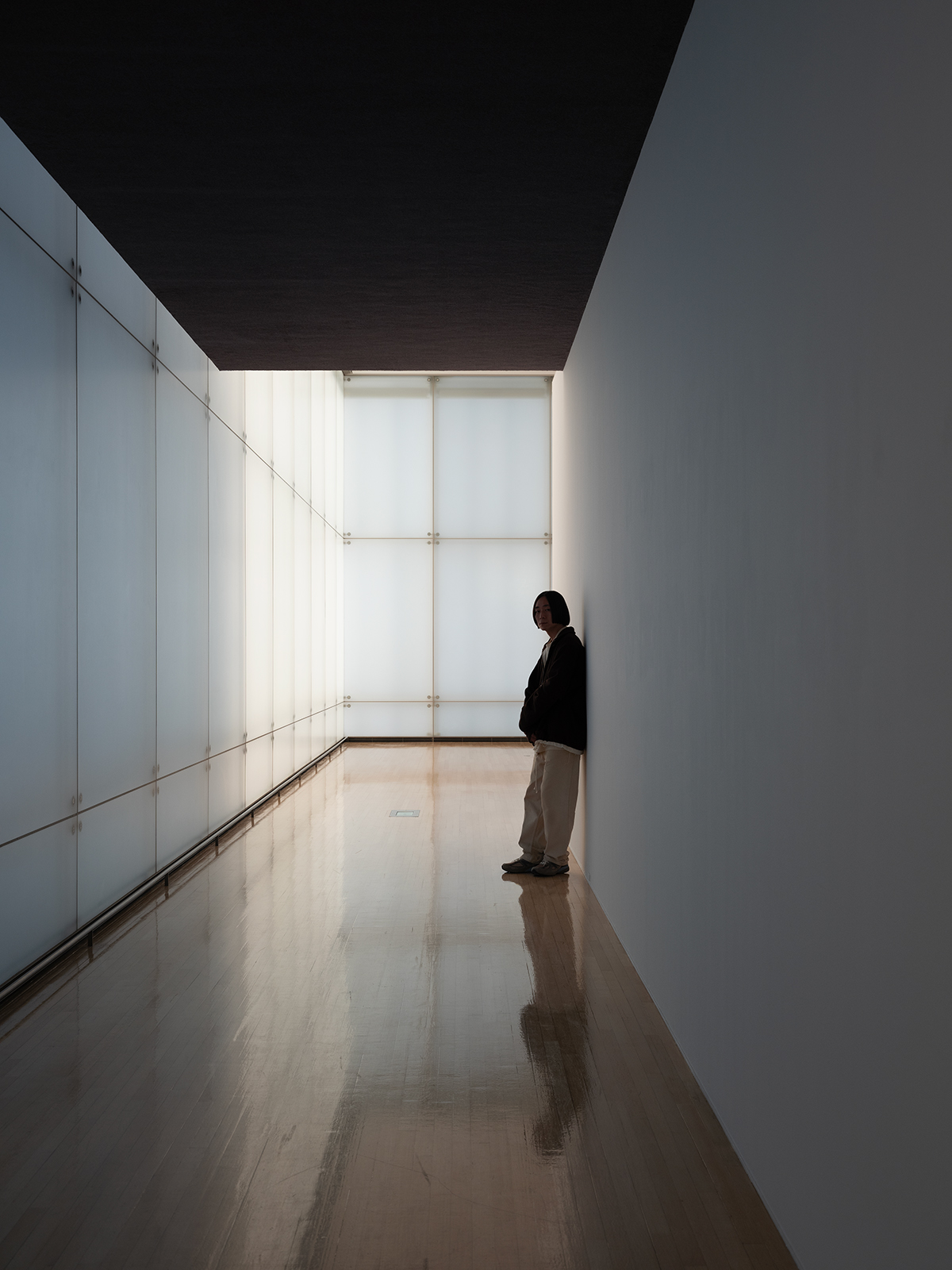
Born in Gifu in 1990, Tamayama lives in Tokyo. After studying at Aichi University of the Arts, he completed a master’s degree at Tokyo University of the Arts in 2015. Drawing on familiar imagery, he creates objects resembling furniture and everyday items. These objects and interior spaces serve as motifs for installations incorporating vivid lighting and sound. Through minimal interventions, he makes spaces unfamiliar or brings the workings of nature into sharper focus, unsettling viewers’ bodily awareness and perception. In 2025, he held the solo exhibition Tamayama Takuro: FLOOR at the Toyota Municipal Museum of Art. In recognition of this exhibition and his work to date, he received the New Artist Award (Fine Arts Division) of the 76th Minister of Education, Culture, Sports, Science and Technology’s Art Encouragement Prize (fiscal 2025).

Settai Komura

Born in Kawagoe in 1887, Komura graduated from the Nihonga-senka of the Tokyo School of Fine Arts (now Tokyo University of the Arts) in 1908. He won acclaim in 1914 for his book design for Kyōka Izumi’s Nihonbashi. At the invitation of Shiseido’s first president, Shinzo Fukuhara (1883–1948), he worked in the company’s Design Department from 1918 to 1923. In contrast to the European and American styles then prevalent in the department, he was responsible for Japanese-style designs and maintained close ties with Shiseido after leaving. In his mid-thirties, he studied under Eikyū Matsuoka (1881–1938), furthering his training in Nihonga. His illustrations for the newspaper serial Osen by Kanji Kunieda (1892–1956) established his reputation as an illustrator. He also demonstrated his talent through numerous stage designs commissioned by leading actors in Kabuki and Shinpa theatre. He died in 1940 at the age of 53. Since his death, Shiseido Gallery has held two exhibitions of his work and Shiseido Art House four. Shiseido’s collection includes more than 70 works by Komura. In recent years, retrospectives across Japan have prompted a growing reassessment of his work.

Jin Qiuyu

Jin Qiuyu is a curator and researcher based in Tokyo. She is currently enrolled in the doctoral program at the Graduate School of Global Arts, Tokyo University of the Arts. Since 2019, she has worked as an independent curator, organizing and curating exhibitions and art fairs in Japan and internationally.

Exhibition Highlights

Settai Komura and Takuro Tamayama: A Collaboration Across Time

Contemporary artist Takuro Tamayama, whose work is attracting growing attention, is creating a new installation for this exhibition, drawing inspiration from Komura’s work and ideas, as well as from Ginza during his lifetime. Bringing together two artistic practices separated by nearly a century, the exhibition offers a fresh reading of Komura’s aesthetic from a contemporary perspective.

Light, Fabric, and Mirrored Surfaces: An Installation That Unsettles Perception

Tamayama’s new installation comprises three elements: light diffused through frosted glass, translucent fabric, and mirror-finished stainless steel. In a space where light, images, and boundaries are continually shifting, the scene changes from moment to moment as viewers move and their perspectives shift. Visitors can experience a sense of time in which “past,” “present,” and “future” overlap.

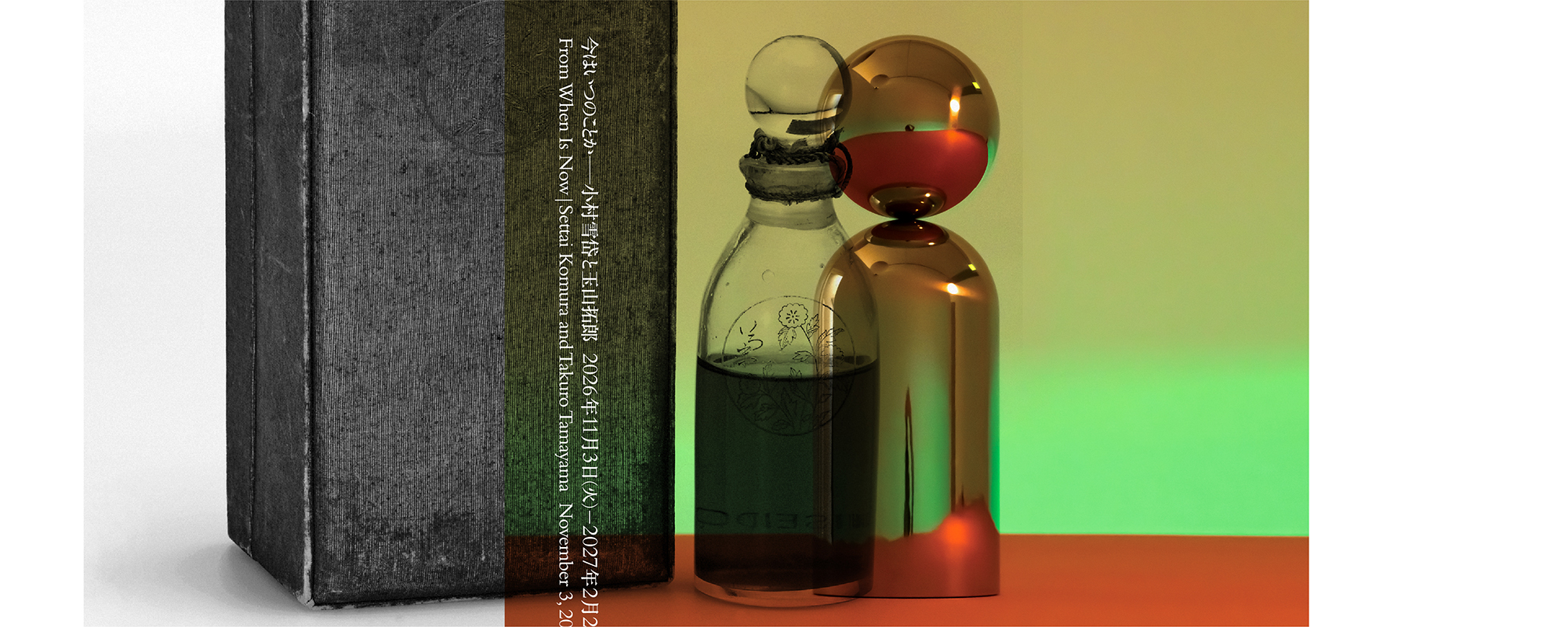
Exhibition key visual

Exhibition key visual

Komura’s Work and the Memories of Ginza

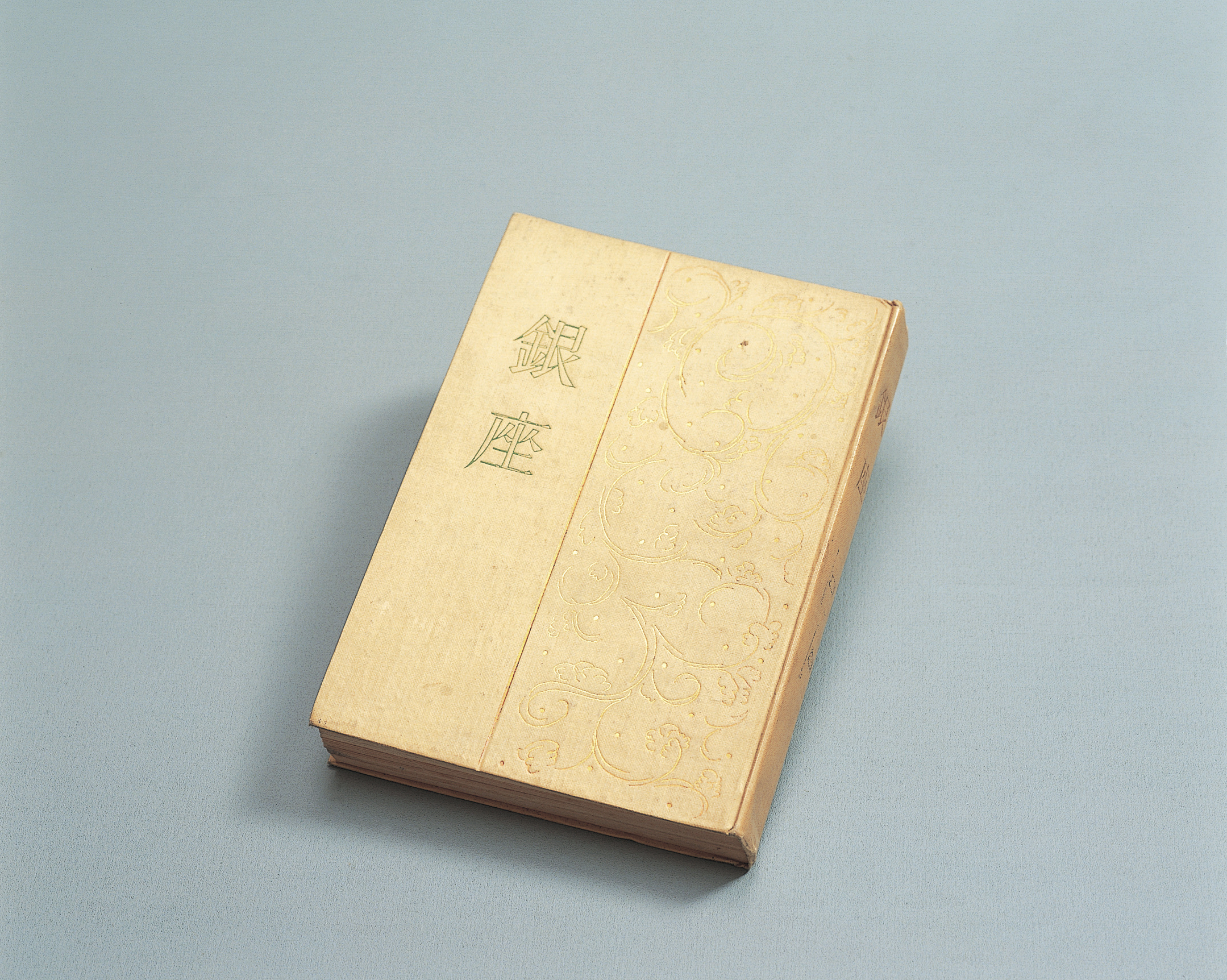
The exhibition presents three works Komura created during his years at Shiseido, together with footage and archival materials showing Ginza as it was during his lifetime. Memories of the district closely associated with Komura—from Shiseido’s Design Department to the Kyūkyūkyūkai salon [2]—resonate with Tamayama’s installation, allowing visitors to experience the layers of time accumulated in Ginza itself.

Ginza, 1921 192 × 133 × 23 mm Collection of the Shiseido Corporate Museum

Ginza, 1921
192 × 133 × 23 mm
Collection of the Shiseido Corporate Museum

Ginza, 1921 192 × 133 × 23 mm Collection of the Shiseido Corporate Museum

Ginza, 1921
192 × 133 × 23 mm
Collection of the Shiseido Corporate Museum

Perfume: Kiku (Chrysanthemum) c. 1920 Collection of the Shiseido Corporate Museum

Perfume: Kiku (Chrysanthemum)
c. 1920
Collection of the Shiseido Corporate Museum

[2] The Kyūkyūkyūkai
A social gathering, or salon, centered on the writer Kyōka Izumi, held primarily during the early Shōwa period. Komura was one of its members. The group brought together leading cultural figures of the day, including novelists and painters, across the fields of literature and art. Its name is said to derive from the membership fee of 9 yen 99 sen.

Exhibition Information From When Is Now? — Settai Komura and Takuro Tamayama

Dates Tuesday, November 3, 2026 – Sunday, February 28, 2027
Venue Shiseido Gallery
B1F, Tokyo Ginza Shiseido Building
8-8-3 Ginza, Chuo-ku, Tokyo 104-0061

Opening Hours Weekdays: 11:00–19:00
Sundays and public holidays: 11:00–18:00
Closed Mondays, including public holidays
Monday, December 21, 2026 – Monday, January 11, 2027
Admission Free
TEL/FAX Tel: 03-3572-3901 Fax: 03-3572-3951
Organizer Shiseido Company, Limited

Related Programs

Talks and other events related to the exhibition are planned.

X (formerly Twitter)

Instagram

Exhibition Catalogue

Title: From When Is Now? — Settai Komura and Takuro Tamayama (working title)
Publisher: oar press
Contributors: Jin Qiuyu and others
Design: Kohsuke Hayashi
Publication / release: Expected after mid-December 2026
Format: Modified A5 format; approximately 128 pages

Shiseido Gallery will participate in the following events (in chronological order)

ARTE TOKYO

Saturday, October 10 – Thursday, December 31, 2026

ARTE TOKYO

DESIGNART TOKYO 2026

Friday, October 30 – Sunday, November 8, 2026

DESIGNART TOKYO 2026

ART WEEK TOKYO 2026

Wednesday, November 4 – Sunday, November 8, 2026

ART WEEK TOKYO 2026

Connect with us